Humans may not have the heart for space travel to Mars
A rat study found cardiac fibrosis and persistent immune changes after simulated spaceflight stresses, with limits for human predictions.
 Editor: Joshua Shavit

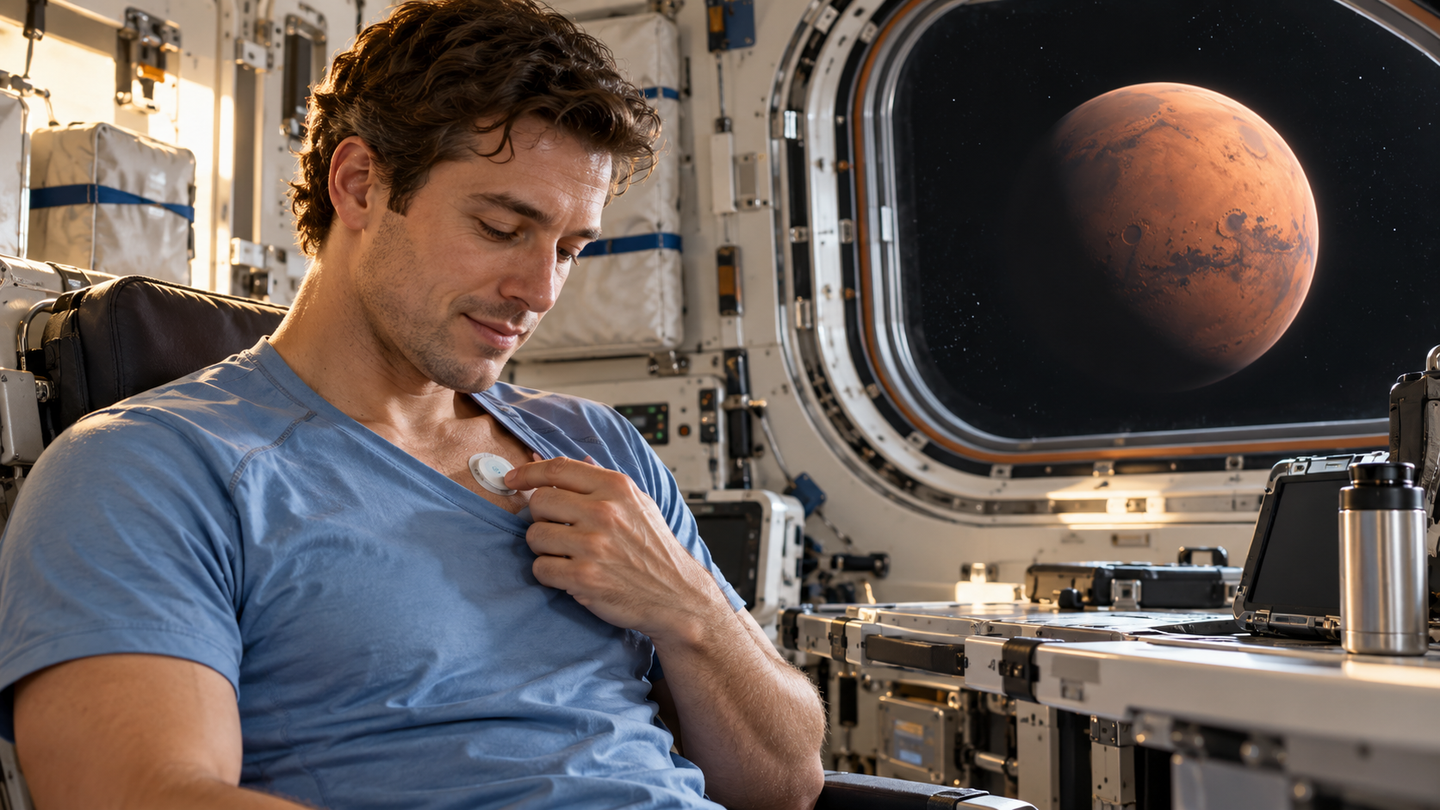
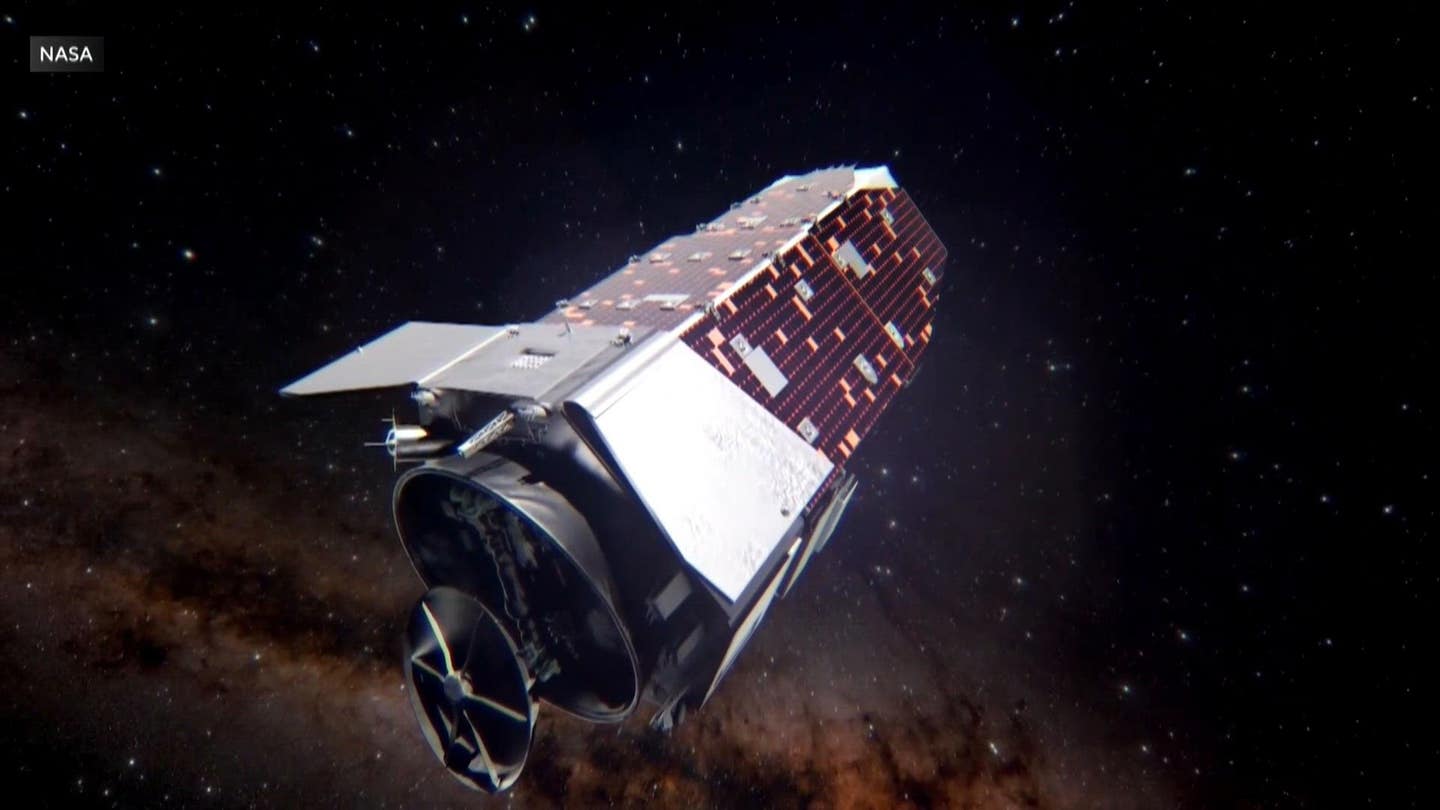
A new study simulated spaceflight conditions developed heart scarring and lasting immune changes, though the findings may not directly apply to humans. (CREDIT: Shutterstock)
- Male rats exposed to simulated cosmic radiation had roughly twice as much collagen around heart blood vessels at long-term follow-up.
- Simulated weightlessness produced persistent changes in immune signaling, but combining the two stressors did not consistently worsen their effects.
- The findings raise questions for astronaut health, while small tissue samples, preliminary DNA results and compressed radiation delivery limit direct human predictions.
Heart tissue examined nearly a year after simulated cosmic-radiation exposure carried a warning for long-distance space exploration. Male rats had accumulated roughly twice as much collagen around small coronary blood vessels as unexposed controls. The finding suggests that assessing radiation hazards requires attention to what happens long after exposure ends.
The Medical College of Wisconsin-led study also found persistent immune changes after simulated weightlessness. Published in PLoS One, the research involved collaborators at Lawrence Berkeley National Laboratory and Wake Forest School of Medicine. It examined several biological systems rather than assuming spaceflight hazards would affect them identically.
The experiments were conducted on Earth, not during astronaut missions. They provide evidence about biological responses in a particular rat model, while leaving important questions about human risk unanswered.
Recreating two spaceflight stresses on Earth
The research program used 72 male WAG/RijCmcr rats, eight to nine months old at the outset. Researchers selected this strain because earlier work showed sensitivity to radiation-related cardiac injury. Investigators analyzing measurements were blinded to the animals’ treatment groups.
At NASA’s Space Radiation Laboratory at Brookhaven National Laboratory, the team used five ion types delivered through six beams. This simplified simulator approximates components of galactic cosmic radiation after spacecraft shielding. It cannot reproduce the entire radiation environment of deep space.
Radiation doses included 0.75 gray and 1.5 gray. A gray measures absorbed radiation energy per unit mass. The authors treated 0.75 gray as representative of a three-year exploration scenario, rather than establishing a single inevitable dose for every Mars mission.
To model aspects of microgravity, some animals underwent hindlimb unloading for 30 days. Their rear legs were suspended while their front limbs supported them, altering loading and fluid distribution. This reproduces selected physiological stresses, rather than removing gravity from the laboratory.
Scar tissue measured months after irradiation
At 360 days after exposure, rats receiving 0.75 gray without hindlimb unloading showed approximately double the collagen deposition around cardiac vessels. Animals receiving 1.5 gray showed a similar increase at 270 days. The higher-dose experiment also included animals exposed to simulated weightlessness.
This buildup is called perivascular cardiac fibrosis. It reflects excess connective tissue around blood vessels, providing structural evidence of injury. Heart-tissue analyses involved only three to six animals per group, smaller subsets than the overall experimental population.
The longer follow-up was important because previous work had not found a statistically significant effect at the lower dose within its shorter observation period. However, the new experiment did not establish the exact moment scarring began. Tissue collected at an endpoint cannot reveal every preceding stage of injury.
“What surprised us most was how strongly time influenced what we saw,” said John Baker, the study’s lead researcher and an MCW professor of surgery. The findings support longer observation when evaluating delayed radiation effects. The team did not measure cardiac pumping performance in this experiment, so fibrosis should not be equated with demonstrated heart failure.
Immune responses did not follow a simple pattern
At 1.5 gray, adding hindlimb unloading did not produce measurably more cardiac fibrosis than radiation alone. Unloading by itself did not significantly increase this cardiac endpoint. The result challenges the assumption that combining spaceflight stresses will always amplify every form of damage.
Immune signaling showed a different pattern. Across longitudinal measurements, unloading alone reduced concentrations of 20 of the 27 cytokines examined. These signaling proteins help coordinate immune responses and inflammation, making persistent changes relevant to understanding recovery after simulated weightlessness.
Unloading also increased several circulating immune-cell populations at late follow-up. Meanwhile, spleen staining showed a reduction in an indicator of natural killer cells. These contrasting findings reinforce that immune disruption can differ between tissues and measurements.
Radiation alone did not produce the same cytokine pattern. Combining the higher radiation dose with unloading also prevented the reductions seen with unloading alone. That interaction does not establish a protective effect, since the study did not demonstrate improved resistance to infection or overall immune health.
The authors identified six decreased cytokines shared with findings from the NASA Twins Study. This overlap supports further investigation of the model’s relevance. It does not establish that microgravity alone caused the human changes, because actual spaceflight combines numerous environmental and operational stresses.
DNA findings offer leads rather than firm diagnoses
The genomic analysis was much smaller. Researchers sequenced blood-cell DNA from three rats exposed to 1.5 gray and three unexposed controls. These animals had not undergone hindlimb unloading, and sampling occurred at one late time point.
The team examined variants in 74 genes previously associated with clonal hematopoiesis, a process in which particular blood-cell lineages expand. Variants appeared in 30 of those genes across the study samples. Seven genes had variants identified only in the irradiated condition.
Some findings were consistent with mutations acquired during life rather than inherited variants. However, differences between individual animals dominated the genomic comparison. Without each animal’s pre-exposure sequence, the experiment could not securely identify every difference as a newly radiation-induced mutation.
Clonal hematopoiesis matters because human research links certain forms with cardiovascular disease and blood-cancer risk. These rat results nevertheless remain exploratory. They do not demonstrate that astronauts will develop those conditions or establish that radiation accelerated whole-body aging.
Translating the results into better risk studies
The exposure schedule presents a major limitation. Radiation was delivered within minutes, whereas astronauts would accumulate much of their cosmic-radiation exposure gradually. The interval between particle hits can affect biological repair and signaling, making total absorbed dose only one part of the comparison.
The study also used only males from one rat strain. Its immune measurements and tissue findings therefore require replication across sexes and models. Future experiments need repeated sampling, functional heart assessments and radiation schedules that better approximate prolonged missions.
Some conventional blood markers, including cholesterol and triglycerides, changed little despite the cardiac tissue findings. Calcium-related measurements showed modest or intermittent changes rather than a uniform collapse of regulation. Together, these results show why different organs and biological signals need separate assessment.
The work offers a rationale for studying long-term surveillance and potential protective measures, rather than a numerical forecast of astronauts’ future disease risk. No countermeasure was tested here. Its central contribution is evidence that selected effects can remain detectable long after simulated exposure, making the period after a mission important to the research agenda.
Dig deeper into space radiation and long-term health
These studies explain radiation simulation, human spaceflight biology and the relevance of blood-cell mutations to cardiovascular research.
Clonal Hematopoiesis and Risk of Atherosclerotic Cardiovascular Disease: Investigates links between acquired blood-cell mutations and cardiovascular disease, providing context for the exploratory genomic analysis. (New England Journal of Medicine, 2017)
The NASA Twins Study: A multidimensional analysis of a year-long human spaceflight: Examines physiological and molecular changes in one spaceflight participant alongside his Earth-based identical twin. (Science, 2019)
NASA’s first ground-based Galactic Cosmic Ray Simulator: Enabling a new era in space radiobiology research: Describes the experimental platform used to approximate aspects of the deep-space radiation environment. (PLOS Biology, 2020)
Retrospective analysis of somatic mutations and clonal hematopoiesis in astronauts: Explores blood-cell mutations in astronaut samples and the questions surrounding their clinical significance. (Communications Biology, 2022)
Biological effects of high-LET irradiation on the circulatory system: Reviews experimental evidence on densely ionizing radiation and cardiovascular biology, including gaps relevant to protection. (International Journal of Radiation Biology, 2025)
Research findings are available online in the journal PLoS One.
The original story "Humans may not have the heart for space travel to Mars" is published in The Brighter Side of News.
Related Stories
- Space habitat design could shape astronaut mental health on Mars missions
- First x-rays captured in space mark breakthrough for astronaut health
- Scientists reveal space travel's profound impact on gut health
Like these kind of feel good stories? Get The Brighter Side of News' newsletter.
Joseph Shavit
Writer, Editor-At-Large and Publisher
Joseph Shavit, based in Los Angeles, is a seasoned science journalist, editor and co-founder of The Brighter Side of News, where he transforms complex discoveries into clear, engaging stories for general readers. With vast experience at major media companies like The Los Angeles Times, Times Mirror and Tribune Publishing, he writes with both authority and curiosity. His writing focuses on space science, planetary science, quantum mechanics, geology. Known for linking breakthroughs to real-world markets, he highlights how research transitions into products and industries that shape daily life.