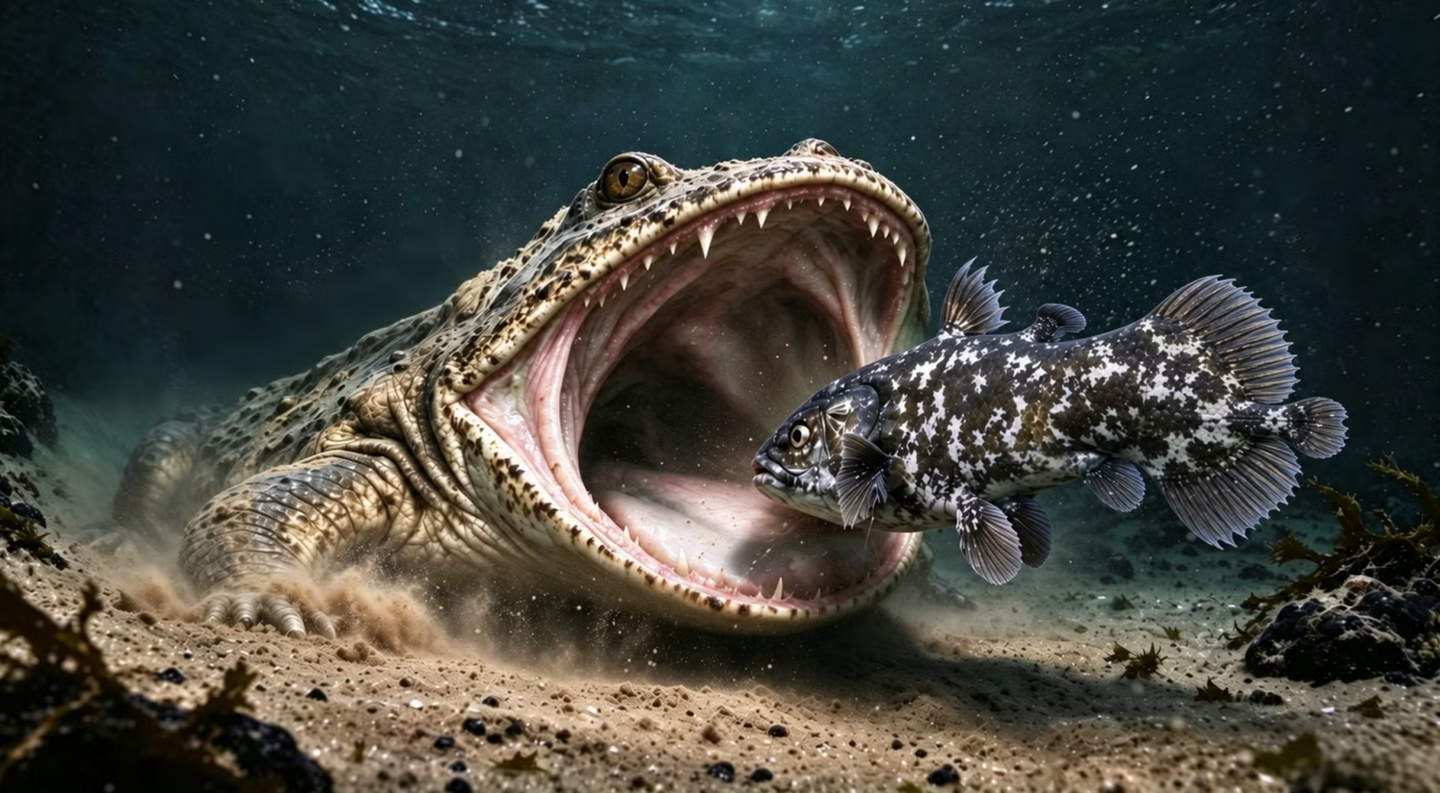
New model flags Red Sea fish that could invade the Mediterranean
Coral-independent Red Sea fish may be the next Mediterranean invaders, according to a model built from underwater observations.
 TAU Writer: Noga Shahar

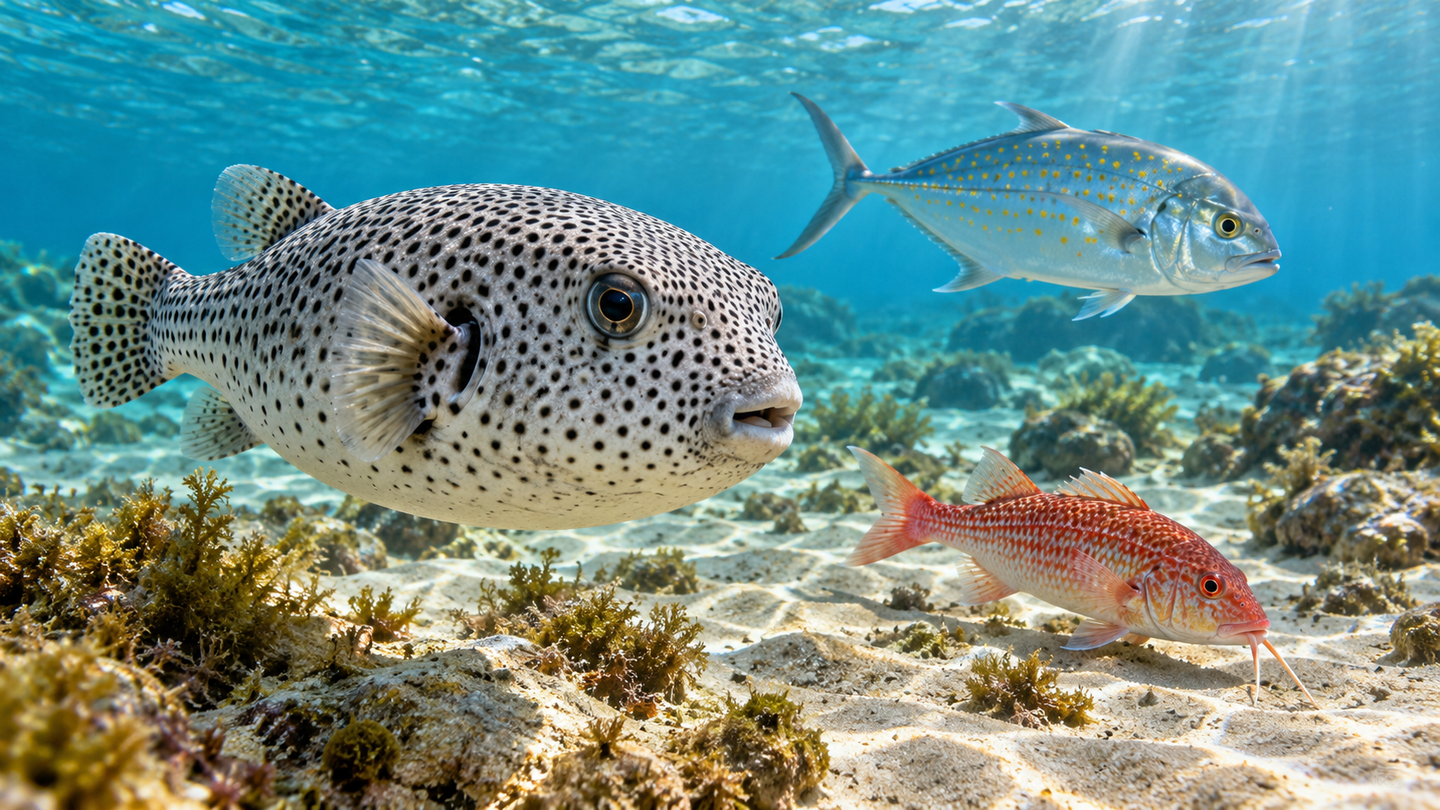
Coral-independent Red Sea fish may be the next Mediterranean invaders, according to a model built from underwater observations. (CREDIT: The Brighter Side of News)
- A model ranks Red Sea fish by their potential to enter the Mediterranean, highlighting three species for closer monitoring.
- Underwater surveys linked invasion potential most strongly to independence from coral habitats, with habitat flexibility also playing a role.
- Established migrants overlapped with native fish in habitat use, suggesting possible competition without demonstrating specific population losses.
More than 120 fish species have already passed from the Red Sea into the Mediterranean.
The route opened with the Suez Canal more than 150 years ago. Since then, tropical fish have steadily entered a sea that once blocked their northward movement.
The next arrivals may no longer be complete surprises.
A model developed by Tel Aviv University researchers ranks Red Sea fish by their chances of invading the Mediterranean. Three species stand out: the stellate pufferfish, cinnabar goatfish, and yellowspotted trevally.
Their scientific names are Arothron stellatus, Parupeneus heptacantha, and Turrum fulvoguttatum.
The forecast rests on an unexpected trait. Successful migrants are not simply fish that tolerate many habitats. They are fish that do not depend heavily on coral reefs.
That difference may help authorities watch for new arrivals before they become established. It also points to greater competition between newcomers and native Mediterranean fish.
A Journey with a Difficult First Stage
The study was led by Dr. Shahar Chaikin during his doctoral research at Tel Aviv University.
Prof. Jonathan Belmaker supervised the work through the School of Zoology, the Wise Faculty of Life Sciences, and the Steinhardt Museum of Natural History.
Dr. Tal Gavriel, doctoral student Avery Deveto, and Shahar Malamud also contributed.
Researchers examined the invasion route from both sides of the canal. That choice mattered.
Earlier studies often concentrated on species that had already entered the Mediterranean. Such an approach can blur two separate questions.
One concerns the traits that allow a fish to invade. The other concerns changes that happen after it arrives. Chaikin and his colleagues studied both the source populations and the established migrants. Their analysis covered 179 fish populations across the Red Sea and Mediterranean.
They used stereoscopic baited remote underwater video systems. The equipment recorded fish at depths between 5 and 150 meters.
Hundreds of hours of footage allowed the team to compare species that had migrated with those still confined to the Red Sea.
Coral Dependence Becomes a Barrier
A fish living comfortably in many settings might seem like the obvious invader.
The results did not support that simple idea. The strongest predictor was whether a species relied on coral reefs.
“The Suez Canal and the Mediterranean contain very few coral reefs like those found in the Red Sea,” Chaikin said.
“Species that depend on coral reefs are therefore unlikely to complete the journey.”
The fish that succeed already know how to live without those reef systems.
That gives them an advantage before they enter the canal. They do not need to find the same coral habitat at each stage.
The model also suggested that shallower-living species had greater invasion potential. However, coral independence carried far more weight. This finding reframes the first stage of migration.
The challenge is not merely crossing a long waterway. A species must pass through environments that may lack the structures it normally uses.
A coral specialist can swim into the canal and still fail to establish a path onward. A fish accustomed to sand, open bottom, or other non-coral settings faces fewer habitat breaks.
Three Fish Move onto the Watchlist
After identifying the most useful traits, the team built a forecasting system.
The model ranked Red Sea species by their similarity to fish that had already invaded. Three high-potential candidates emerged near the top.
The stellate pufferfish can grow into a large, strongly marked fish. The cinnabar goatfish and yellowspotted trevally also matched the ecological profile linked with successful migration.
The full list appears in the published paper.
The researchers do not claim that each species will certainly invade. A statistical ranking identifies potential, not a timetable. Still, such predictions can focus monitoring.
Marine scientists cannot watch every Red Sea species with equal intensity. A shorter list gives them a practical place to begin. The Mediterranean’s warming waters add urgency.
As temperatures rise, tropical fish may find it easier to survive farther north. Species that once encountered unsuitable conditions may gain new opportunities to establish populations.
The watchlist therefore combines current habitat traits with a changing environmental background.
Arrival Does Not Preserve Old Habits
The research did not stop when a fish crossed into the Mediterranean. Once established, migrant species changed how they used habitat.
The team had expected some newcomers to retain the preferences seen in the Red Sea. Instead, the fish shifted toward what the Mediterranean offered.
They did not all move in one consistent direction. Some used rocky areas. Others expanded into silt, macroalgae, or broader habitat ranges.
The important pattern was flexibility after arrival. A species could enter because it lacked coral dependence, then reorganize its habitat use in the new sea.
That two-step process helps explain why predictions based only on native behavior can fail.
A fish may appear tied to one set of conditions in the Red Sea. After migration, it may occupy something quite different.
This adaptability makes established invaders harder to contain within expected boundaries.
No Empty Niche Waiting for Them
Another finding challenged a common idea about biological invasions. Introduced fish did not mainly settle into unused habitat.
They occupied the same types of places as native Mediterranean species.
That overlap suggests newcomers may compete for food, shelter, and space. The study found that established migrants became difficult to distinguish from native fish by habitat use alone.
In ecological terms, they blended into the existing community.
Yet visual similarity in habitat does not mean the arrival has no effect. If two species rely on the same rocky bottom, depth range, or feeding area, their needs can collide.
Competition may become stronger than earlier assumptions suggested.
The researchers did not directly measure every competitive interaction. Their habitat findings identify the conditions where such pressure may occur.
That distinction matters. The work predicts where overlap exists, not which native species will decline.
A Model Built for Early Warning
“Until now, researchers have tried to understand biological invasions primarily by examining species that had already reached the Mediterranean,” Belmaker said.
“We took a step back and asked what characterizes these species before they begin their journey.”
That shift turns a historical question into a forecasting tool.
Instead of asking only why yesterday’s invaders succeeded, the model asks which fish deserve attention now. Early detection could give environmental agencies more options.
A newly arrived species may remain limited to a small area. Once it spreads widely, monitoring and management become more difficult.
The researchers believe watchlists could guide surveys, environmental planning, and decisions about marine protection. The model may also improve as scientists collect more observations.
Field data from both seas remain essential because invasion involves more than climate. Habitat, depth, abundance, and post-arrival flexibility all shape the outcome.
Practical Implications of the Research
Marine monitoring programs could use the rankings to decide where to place cameras, surveys, and identification efforts.
Species near the top of the list may deserve closer attention around the Suez Canal and Israel’s Mediterranean coast. Authorities could also train observers to recognize likely newcomers before their populations expand.
The study suggests that coral dependence should become part of future risk assessments.
A species that thrives away from reefs may face fewer barriers during migration. Once established, its habitat preferences may broaden further. Conservation planning must also account for overlap with native fish.
New arrivals may not settle harmlessly into unused space. They may enter habitats already supporting Mediterranean species.
Warming will probably make the invasion pathway more favorable for tropical fish.
The model cannot identify the exact date of the next arrival. It can narrow the field. That is a meaningful step in a sea where biological change is already underway.
Dig deeper into Mediterranean fish invasions
These resources explain the forecasting approach, regional warming and evidence about changing fish communities.
Which Fish Will Invade the Mediterranean Next?
Tel Aviv University's account explains the candidate species and the monitoring goals behind the model. (Tel Aviv University, July 2026)
Deeper than we thought: New depth records for northern Red Sea and eastern Mediterranean Sea fishes
This related study shows how underwater observations improve knowledge of fish depth distributions in both regions. (Mediterranean Marine Science, January 2026)
Cross-basin and cross-taxa patterns of marine community tropicalization and deborealization in warming European seas
This research examines how warming changes marine communities across European seas, providing context for shifts toward warm-water species. (Nature Communications, March 2024)
Spatio-temporal dynamics of exotic fish species in the Mediterranean Sea: Over a century of invasion reconstructed
This historical analysis reconstructs introductions and the spread of exotic Mediterranean fish using published observations. (Global Change Biology, September 2022)
Shifts in Eastern Mediterranean Fish Communities: Abundance Changes, Trait Overlap, and Possible Competition between Native and Non-Native Species
This study examines changes in fish abundance and the extent to which competition may explain native species' declines. (Fishes, April 2018)
Research findings are available online in the journal Journal of Animal Ecology.
The original story "New model flags Red Sea fish that could invade the Mediterranean" is published in The Brighter Side of News.
Related Stories
- Gulf of California orcas use precision strikes to explode sunfish into thousands of pieces
- Scientists find evidence of a rare double supernova in the Jellyfish Nebula
- Overfishing has made bottlenose dolphins in the Adriatic Sea heavily reliant on fishing trawlers for food
Like these kind of feel good stories? Get The Brighter Side of News' newsletter.
Joshua Shavit
Writer and Editor
Joshua Shavit is a NorCal-based science and technology writer with a passion for exploring the breakthroughs shaping the future. As a co-founder of The Brighter Side of News, he focuses on positive and transformative advancements in technology, physics, engineering, robotics, and astronomy. Having published articles on AOL.com, MSN, Yahoo News, and Ground News, Joshua's work highlights the innovators behind the ideas, bringing readers closer to the people driving progress.