Antarctica’s ice sheet losses could rebound — if history can repeat itself
Study shows East Antarctica’s ice thinned rapidly, then modestly thickened, reshaping sea level and climate risk projections.

 Edited By: Joseph Shavit
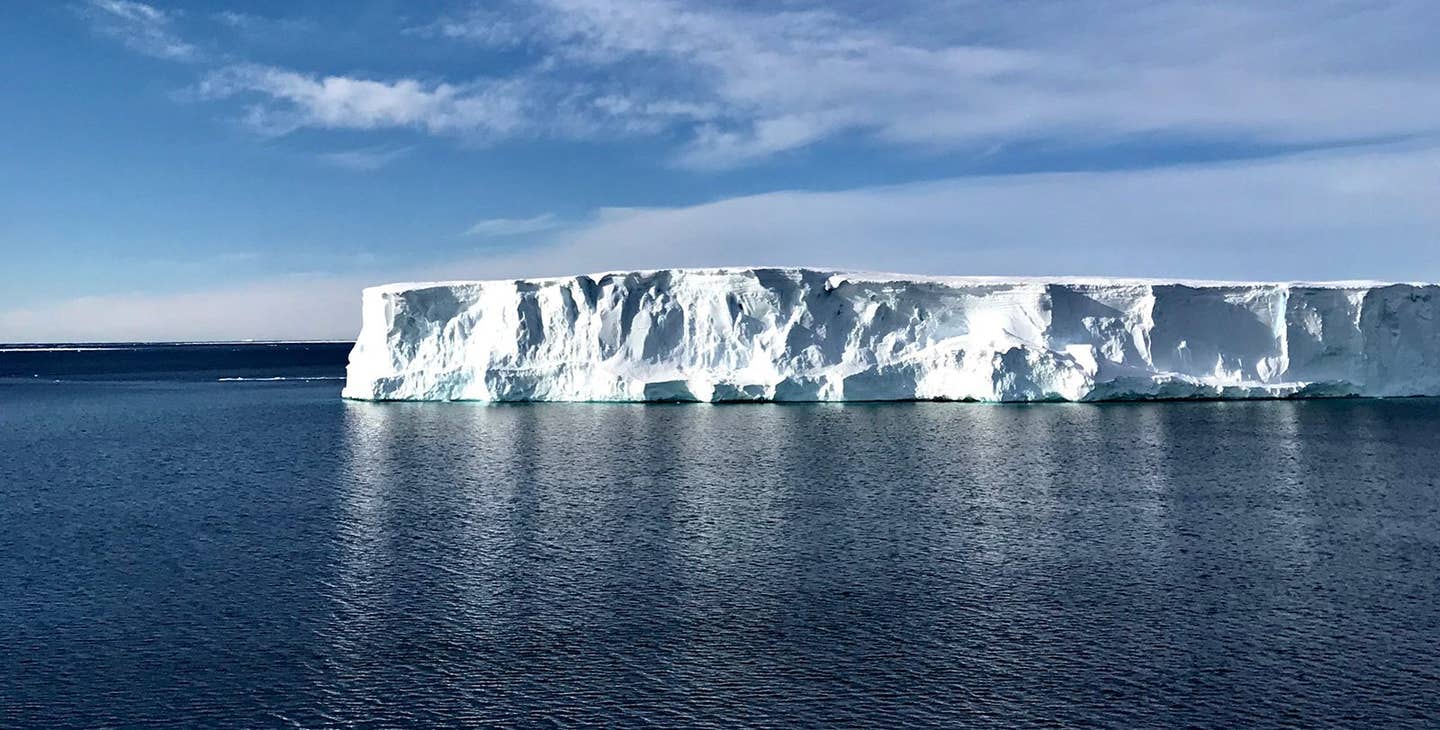
A new study reveals that the East Antarctic Ice Sheet thinned rapidly between 9,000 and 6,000 years ago, then likely re-thickened by up to 100 meters, challenging standard deglaciation models and sharpening future sea level forecasts. (CREDIT: Andy Thompson / Caltech)
Headlines about melting ice sheets usually focus on what is lost and then move on. What comes next is often overlooked, even though it matters just as much. A new study of East Antarctica reaches back thousands of years to trace that “after” story and finds that ice there did something unexpected. It thinned quickly, then appears to have thickened again.
Looking Back to See What Comes Next
To better understand where today’s warming might lead, the research team turned to the past. They focused on the East Antarctic Ice Sheet along the Lützow Holmbukta coast, a region that holds clues to how ice once responded to natural climate shifts.
Earlier work suggested that this part of the ice sheet lost a large amount of thickness between about 9,000 and 6,000 years ago. That period, known as the mid Holocene, followed the last Ice Age. The key question now was what happened after that rapid thinning.
Did the ice keep shrinking, did it simply stabilize, or did it recover some of its height? The answer matters, because it shapes how scientists think large ice sheets might behave under future warming. It also affects sea level projections that guide global planning.
Tracking Ice Through the Earth’s Slow Rebound
To probe this ancient history, the researchers did not drill deep ice cores. Instead, they watched how the solid ground is moving today. They used Global Navigation Satellite System stations to measure tiny vertical shifts of the crust in the Lützow Holmbukta region.
When heavy ice melts, the land below begins to rise. When ice grows thicker again, the crust sinks under the added weight. This slow “bouncing” is called glacial isostatic adjustment. By modeling that rebound, scientists can reconstruct how much ice once sat on top of a region.
The team combined these satellite measurements with glacial isostatic adjustment models that simulate Earth’s response to changing ice and water loads. They built several ice loading histories that all included a period of rapid mid Holocene thinning documented near Skarvsnes in East Antarctica.
These scenarios also drew on earlier geologic studies, creating what the authors describe as an integrated approach. That method allowed them to test different stories of past ice behavior against the hard evidence of how the crust is moving today.
When Global Models Fall Short
At first, the scientists compared the satellite data with predictions from existing global deglaciation models. Those large scale reconstructions describe how ice sheets worldwide retreated after the last Ice Age.
In this part of East Antarctica, the match was poor. The crustal uplift predicted by published global ice models did not line up with the actual movements recorded in Lützow Holmbukta. The land was rising in ways those models could not explain.
“This highlights that regional ice sheet histories can differ markedly from continental scale trends, and the ice sheet possesses mechanisms for both rapid change and subsequent stabilization, which provides important insights into ice sheet behavior under changing climate conditions,” said study author Jun’ichi Okuno.
The mismatch signaled that something important was missing from the standard picture of how this coastal sector evolved.
Evidence For a Second Act of Growth
To close that gap, the researchers tested new scenarios that added a twist to the story. In these versions, the ice sheet first thinned rapidly during the mid Holocene, then experienced a modest re-thickening of about 65 to 100 meters afterward.
When those scenarios were run through the glacial isostatic adjustment models, the results improved sharply. The predicted crust motion matched the satellite observations far better than the global deglaciation models. The improvement was large enough to be statistically significant.
“Our findings demonstrate that the East Antarctic Ice Sheet in this region experienced complex mid Holocene dynamics, with scenarios incorporating modest ice sheet re-thickening (65-100 m) following rapid thinning providing statistically significant improvement over global deglaciation models,” Okuno said.
The study suggests that the ice sheet in Lützow Holmbukta did not simply retreat and then stop. Instead, it appears to have gone through a more complicated cycle, with a phase of recovery after a major loss.
Local Stories and Global Risks
"That pattern carries a key message. Antarctica’s ice does not move in lockstep across the continent. Local conditions, such as ocean currents, winds, and bedrock shape, can drive regional histories that differ from the global average," Okuno clarified for The Brighter Side of News.
"In Lützow Holmbukta, the evidence points to an ice sheet that can change quickly, then stabilize or even thicken again. That dual capacity for rapid retreat and partial recovery reveals a system that responds in nuanced ways to climate forces," he continued.
While the study focuses on the past, it also underscores why scientists cannot rely only on broad continental models when predicting future changes. Regional behavior may alter how much ice is lost, and how fast, which in turn affects sea level rise.
A Window Into Earth’s Interior
The work did more than refine ice history. Because glacial isostatic adjustment depends on how Earth’s interior flows, the study also helped pin down properties of the mantle beneath East Antarctica.
By finding Earth structure parameters that best matched the observed crustal motions, the researchers gained new insight into how the deep interior behaves in this region. They used a three layer Earth model that performed well for the local data.
At the same time, they cautioned that this structure may not represent the entire Antarctic continent. Variations in rock composition and temperature likely exist elsewhere, which means the same parameters cannot be applied everywhere without further testing.
Next Steps For Ice and Climate Projections
The team sees several ways to build on this work. One priority is to extend their integrated approach to other parts of East Antarctica, to see whether similar thinning and re-thickening patterns appear. That would help reveal how widespread these complex dynamics are.
Another goal is to lengthen the GNSS time series. Longer records of crustal motion would sharpen estimates of uplift rates and reduce uncertainty in model comparisons. Better data could further refine both ice history and Earth interior parameters.
Together, these advances would feed directly into improved projections of how the East Antarctic Ice Sheet may respond to current and future warming. More accurate ice histories help scientists build better sea level forecasts, which are vital for coastal communities worldwide.
Practical Implications of the Research
This study shows that parts of the East Antarctic Ice Sheet can undergo rapid thinning, then experience modest thickening afterward. That complexity challenges simple assumptions of steady retreat and reminds scientists that regional ice histories can differ greatly from global models.
For climate research, the findings highlight the need to include detailed regional reconstructions when modeling future sea level rise. If some sectors can stabilize after loss under certain conditions, that behavior must be understood and represented correctly. Otherwise, projections may either understate or overstate risk.
For policymakers and planners, more reliable sea level forecasts mean better guidance for coastal defenses, zoning, and infrastructure investments. Knowing how sensitive different parts of Antarctica are to warming helps focus monitoring and research funds where they matter most.
For the broader scientific community, the integrated approach using GNSS data and glacial isostatic adjustment modeling offers a practical template. It can be applied in other polar regions to uncover hidden chapters of ice sheet behavior and refine models of Earth’s interior.
Ultimately, by reading the slow rise and fall of the ground beneath Antarctica, this research gives humanity a clearer view of how giant ice sheets may respond to the climate choices made today.
Research findings are available online in the journal Scientific Reports.
Related Stories
- Ocean storms under Antarctic ice found to rapidly boost melting
- Hektoria glacier’s record breaking collapse signals a much bigger Antarctic threat
- Ancient Antarctic ice reveals six million years of Earth’s climate history
Like these kind of feel good stories? Get The Brighter Side of News' newsletter.
Shy Cohen
Science & Technology Writer